
🔥 Introduction
Overthinking is one of the most common mental habits that quietly affects millions of people. You replay conversations, imagine worst-case scenarios, and analyze situations again and again.
It feels like you are being productive, but in reality, overthinking drains your energy and stops you from taking action.
The problem is not thinking — the problem is thinking too much without control.
This guide will help you understand why overthinking happens and how you can break the cycle using simple psychological strategies.
🧠 What is Overthinking?
Overthinking is the habit of analyzing situations excessively, often focusing on negative possibilities.
It usually involves:
Replaying past events
Worrying about the future
Doubting your decisions
👉 Instead of solving problems, it creates more confusion.
⚡ Why Do People Overthink?

Overthinking is not random. It has psychological reasons.
Common Causes:
Fear of failure
Need for control
Lack of clarity
Low confidence
Your brain tries to protect you by analyzing everything, but it ends up creating stress.
🔁 The Overthinking Loop
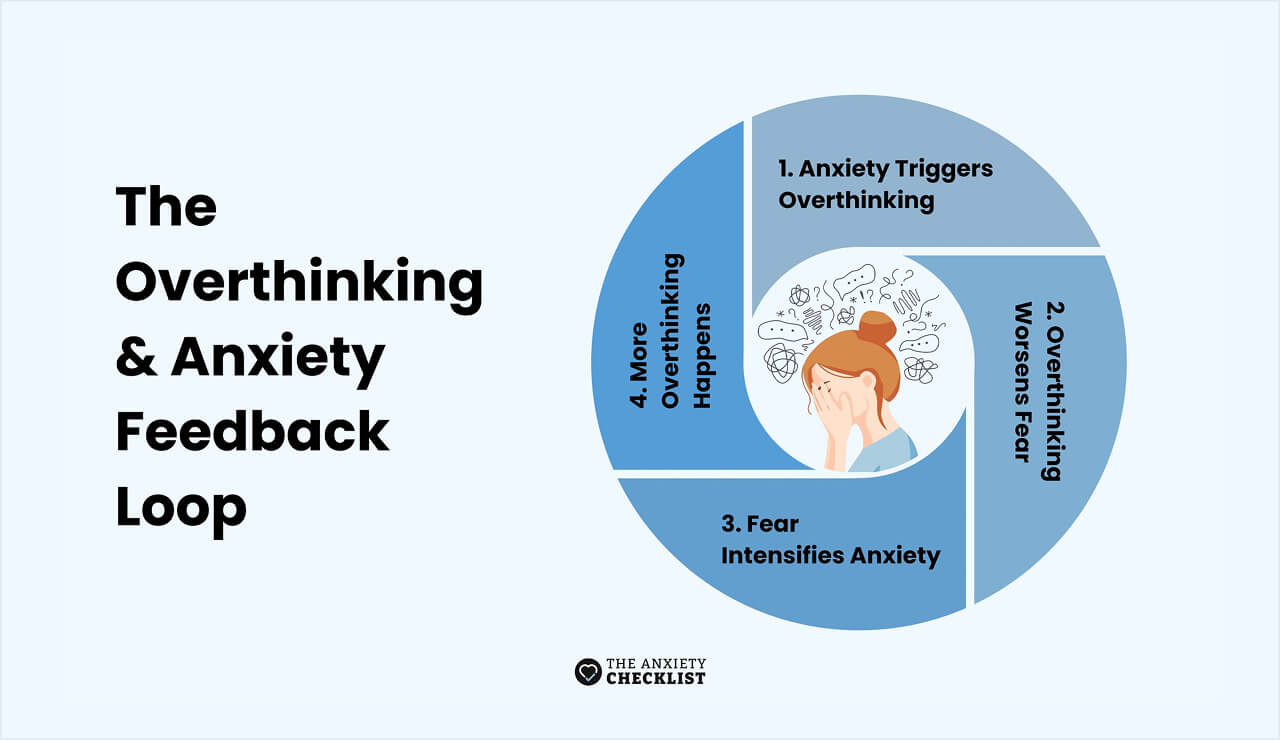
Overthinking follows a pattern:
👉 Thought → Doubt → Fear → More Thinking
This loop keeps repeating, making it hard to take action.
🚫 Why Overthinking is Dangerous

Overthinking can lead to:
Mental exhaustion
Anxiety
Poor decisions
Lack of action
👉 The more you think, the less you do.
🧩 Step 1: Become Aware of Your Thoughts

The first step is awareness.
Instead of getting lost in thoughts:
👉 Observe them
Ask yourself:
“Is this useful?”
“Am I solving something or just worrying?”
⏱️ Step 2: Limit Thinking Time

Set a time limit for thinking.
👉 Example:
10–15 minutes to analyze
Then take action
This prevents endless loops.
📵 Step 3: Shift to Action

Action breaks overthinking.
Even small actions:
Reduce anxiety
Build confidence
👉 Clarity comes from action, not thinking.
🧠 Step 4: Accept Uncertainty

You cannot control everything.
Overthinking comes from trying to predict everything.
👉 Accept that uncertainty is normal.
🔄 Step 5: Replace Negative Thoughts

Instead of:
❌ “What if everything goes wrong?”
Think:
✅ “What if things work out?”
👉 This reduces fear.
⚠️ Common Mistakes to Avoid
Trying to stop thinking completely
Ignoring emotions
Waiting for perfect clarity
Overanalyzing small decisions
📈 Realistic Progress
| Time | Change |
|---|---|
| Few days | Awareness |
| 1–2 weeks | Better control |
| 1 month | Reduced overthinking |
🧠 Conclusion
Overthinking is not a permanent problem. It is a habit that can be changed.
The goal is not to stop thinking, but to think better and act more.
Start with awareness, take small actions, and accept uncertainty.
Over time, your mind will become calmer and clearer.
Frequently Asked Questions (FAQs)
Q1. What is overthinking in simple terms?
Overthinking is the habit of thinking too much about a situation, often focusing on negative outcomes. Instead of helping you solve problems, it creates stress and confusion.
Q2. Why do I overthink everything?
Overthinking usually happens due to fear, uncertainty, or lack of confidence. Your brain tries to protect you by analyzing every possibility, but it ends up creating unnecessary worry.
Q3. Can overthinking be stopped completely?
It is not possible to stop thinking completely, but you can control overthinking. With practice and awareness, you can reduce unnecessary thoughts and focus on useful thinking.
Q4. How can I stop overthinking quickly?
You can reduce overthinking by taking action, limiting your thinking time, and shifting your focus to something productive. Even small actions can break the overthinking cycle.
Q5. Is overthinking linked to anxiety?
Yes, overthinking is often connected to anxiety. Constant negative thoughts can increase stress and make you feel overwhelmed.
Q6. How long does it take to reduce overthinking?
Some improvement can be seen within a few days, but building control over your thoughts usually takes a few weeks of consistent effort.
Q7. Does overthinking affect decision-making?
Yes, overthinking can make decision-making harder by creating confusion and doubt. It often leads to delay or avoidance of decisions.
Q8. What is the best habit to reduce overthinking?
The best habit is taking action instead of thinking too much. Focusing on small steps helps reduce mental clutter and builds clarity over time.